What is Reiki?
A Holistic Approach to Healing

Mikao Usui, founder of Reiki
Read Brief History of Reiki below.
Photo: Wikimedia Commons, public domain.
Reiki (ray-key) is a Japanese word that loosely translates to "universal life energy."
The idea is pretty simple: there's a life force energy that flows through all living things, and when that energy gets blocked or out of balance, we can feel it — physically, emotionally, spiritually.
Reiki works to support that flow.
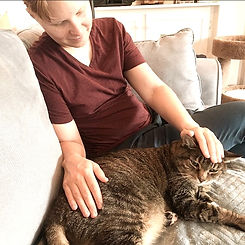
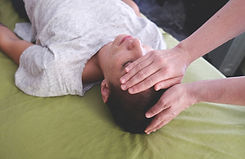
A practitioner acts as a kind of conduit, channeling that energy through their hands to the person (or animal!) receiving the session. The recipient stays fully clothed and just... receives.
The energy is channeled to where it's needed most. We do not have to understand or be able to articulate where we need to bring about balance.
I consider a treatment a collaborative effort including the practitioner and the recipient. And the energy is guided by the recipient’s inner wisdom.
The Five Reiki Principles
Reiki is also guided by a set of principles that practitioners learn and value. I genuinely try to carry these through my own daily life:
Just for today, I will not be angry.
Just for today, I will not worry.
Just for today, I will be grateful.
Just for today, I will do my work honestly.
Just for today, I will be kind to every living thing.
That last one is a big part of why animal reiki feels so natural to me.


1 hr
125 US dollars
What Might You Experience?
Everyone's experience is a little different, but people generally seek reiki for stress-reduction and relaxation. Some say their spiritual connection is encouraged by reiki.
Because of the nature of our fast-paced world today, we might not get enough deep rest, even in our sleep! And we know rest is a key for healing. It’s why “get some rest and drink lots of water” is a common well wish for illness.
Folks often notice things like:
-
A sense of deep relaxation and stress relief
-
Emotional release or a lighter feeling
-
Reduced physical discomfort
-
More mental clarity
-
A general sense of "I don't know what that was, but I feel better.”
Some folks won’t notice anything, and that’s okay. The healing will still have taken place, with the recipient’s permission, of course.
The energy is generally gentle and grounding, but the way trauma is stored in the body, there could be other feelings that occur during or after sessions. Crying is not unusual, and it’s completely welcome. The integration period takes about 3 days after the treatment, and I am fascinated to learn what gets revealed for folks after they leave.
Reiki works beautifully alongside traditional medical care — it's not a replacement for it, jbut it complements medical care and other healing practices quite well.

Photo by Mikhail Nilov
A Note on Learning Reiki
I am not currently teaching Reiki. As time and alignment changes, that may change, too. :)
Folks looking learn reiki will sometimes reach out to ask who I'd recommend as a teacher. I know several Reiki teachers in the area and in other places.
However, if you're feeling called or curious about learning Reiki, my honest advice is to search for teachers in your area (or online). Visit their websites (and/or socials) and tune into how you are feeling as you browse.
There's usually an inner knowing about who's the right fit. Trust that.
Remote Sessions
One of the coolest things about this work is that it doesn't require us to be in the same room! Or for me to be in your home with your dear animal companion. (I do adore house visits for animal reiki, though. What an honor to be trusted to work with those you love.)
Remote Reiki is just as effective over distance as in person, which means wherever you are, we can work together.
Now, to be clear, if you’re in outer space, I might still ask you to beam me up.

Photo by Brit Davis

A Brief History of Reiki
Reiki was developed in Japan in the early 1900s by Mikao Usui, who is credited with rediscovering this ancient healing practice.
Usui passed his teachings to Chujiro Hayashi, a naval doctor who refined the hand positions and opened one of the first Reiki clinics in Tokyo. There, one person might receive reiki from a few practitioners at the same time, which I imagine was quite powerful.
It was there that a Hawaiian woman named Madam Hawayo Takata received treatments that she credited with healing her from several serious conditions. She went on to train under Hayashi and eventually brought Reiki to the West in the late 1930s. Honestly, we might not have it here at all without her.
Takata is a complicated figure in Reiki history. She took some liberties with the origin story — likely to make Reiki more acceptable to Western audiences at a time when Japan and the US were at war — and she charged steep fees that not everyone agreed with.
Still, she was a Japanese-American woman navigating serious discrimination here, doing something remarkable, and I think we owe her a lot of credit. She championed a core principle: Reiki has real value and practitioners deserve to be compensated for their work.
When you receive a session, you're connected to a lineage that travels all the way back to Usui's original teachings. I have photos of Usui, Hayashi, and Takata framed in my office in reverence and memory.
Even with all the messy, human history in between, I am proud to be a conduit for this incredible energy. May my reiki practice honor Usui, Hayashi, and Takata, and all those who offer(ed) this work thoughtfully and honestly in service to the highest good of all.
Photography by Brit Davis